IPTV vs OTT Services: The Complete Comparison for 2025
Introduction
iptv vs ott
In recent years, the way people consume television and video content has changed dramatically. Traditional cable and satellite services are steadily losing ground to internet-based platforms that offer more flexibility, accessibility, and control. Two key players in this digital transformation are IPTV (Internet Protocol Television) and OTT (Over-The-Top) services. Both deliver content through the internet, but they operate in very different ways.
This article explores the major differences between IPTV and OTT services in 2025, analysing how they work, their advantages, limitations, and where each is heading. As the streaming industry continues to expand globally, understanding the distinctions between these two systems is crucial for consumers, content creators, and service providers alike.
What is IPTV?
IPTV (Internet Protocol Television) is a technology that delivers television content through internet protocol networks rather than traditional satellite or cable formats. Unlike conventional broadcast methods that send signals to everyone simultaneously, IPTV streams media directly to a viewer’s device through a managed network.
This managed network is usually controlled by a telecommunications company or an internet service provider. Because it operates within a closed system, IPTV ensures a consistent level of quality, bandwidth management, and low latency.
The main types of IPTV services are:
- Live Television: Streaming channels in real time, just like traditional broadcasting.
- Video on Demand (VOD): Allowing users to select and watch videos at their convenience.
- Time-Shifted TV: Letting viewers pause, rewind, or rewatch shows that have already aired.
Many IPTV providers supply a set-top box that connects to the television and decodes the signal. This setup offers a reliable experience similar to cable but with the added benefits of internet delivery, such as interactivity and digital features.
What is OTT?
OTT (Over-The-Top) services deliver video and television content via the public internet, bypassing traditional operators and networks. Unlike IPTV, OTT platforms do not rely on managed infrastructure; instead, they use global content delivery networks (CDNs) to distribute data efficiently across different regions.
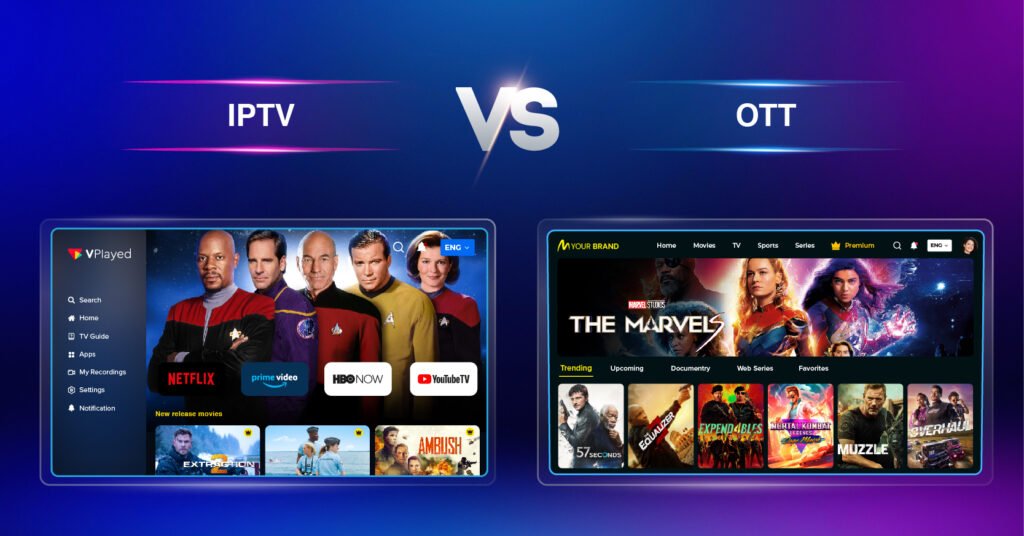
OTT services can be accessed through apps or web browsers on almost any internet-enabled device, including smart TVs, smartphones, tablets, and computers. Examples of popular OTT services include Netflix, YouTube, Hulu, Amazon Prime Video, and Disney+.
OTT platforms are flexible, easy to access, and often more affordable than IPTV subscriptions. They use adaptive streaming technology to adjust video quality depending on the viewer’s internet speed, ensuring smoother playback even under fluctuating conditions.
How IPTV and OTT Work
Though both IPTV and OTT use the internet, the way they transmit and deliver content is fundamentally different.
IPTV operates within a closed and managed network. Service providers allocate bandwidth specifically for video streams, guaranteeing consistent quality regardless of network congestion. This means minimal buffering, stable connections, and a predictable experience.
On the other hand, OTT operates over the open internet. Content is stored in the cloud and distributed through CDNs that replicate and cache data closer to users around the world. When you click “play” on an OTT platform, the video is streamed directly from these CDN servers using protocols like HLS (HTTP Live Streaming) or MPEG-DASH.
In short:
- IPTV = Managed network, controlled delivery, stable performance.
- OTT = Open network, public delivery, flexible access.
Key Differences Between IPTV and OTT
While both deliver digital video through the internet, the differences between IPTV and OTT define their usability, quality, and scalability.
1. Network and Delivery
IPTV functions through a private, managed network. It’s often part of a service bundle provided by an ISP. Because the provider controls the entire infrastructure, they can ensure smooth streaming with guaranteed bandwidth.
OTT content is distributed over the open internet, using global CDNs. It doesn’t depend on a specific ISP or network, which means it’s more flexible but can suffer from inconsistent quality depending on the user’s internet connection.
2. Quality and Reliability
IPTV offers stable performance and high-quality video, thanks to its dedicated bandwidth and controlled environment. It is ideal for live TV, sports broadcasts, and premium experiences that demand minimal delay.
OTT services rely on public networks, making their quality dependent on a user’s connection speed. While adaptive bitrate streaming helps maintain playback, the experience can vary widely between users and regions.
3. Hardware and Compatibility
Most IPTV services require a set-top box or dedicated app connected to a managed network. This can limit mobility and restrict viewing to specific devices.
OTT platforms, however, are designed for flexibility. Users can access content from any internet-connected device — smartphones, smart TVs, tablets, or PCs — without needing special hardware.
4. Scalability
OTT services are far more scalable. Adding new users doesn’t require physical infrastructure upgrades because everything runs on cloud servers. IPTV, on the other hand, depends on local network capacity; expanding it means upgrading infrastructure and managing bandwidth.
5. Latency
In live broadcasting, latency refers to the delay between real-time events and what viewers see on screen. IPTV typically delivers lower latency due to its managed networks. OTT platforms often have a slight delay, especially when streaming live sports or news.
Content and Features (iptv vs ott)
Both IPTV and OTT offer a variety of content, but their approach differs significantly.
IPTV traditionally mirrors the structure of traditional television. It includes live channels, catch-up TV, and video-on-demand libraries. Many providers replicate cable packages but enhance them with internet-based features like interactive program guides or cloud DVR.
OTT platforms are more dynamic. They focus on on-demand streaming, allowing viewers to watch what they want, when they want. They also rely heavily on content personalisation, where algorithms recommend shows and films based on user preferences.
While IPTV is often tied to regional licensing and limited catalogues, OTT services generally provide a wider, global range of content — from movies and series to documentaries and live events.
Device Compatibility and User Experience
OTT wins in terms of accessibility and user experience. Users can log in on multiple devices, switch between screens, and continue watching from where they left off. The interface is modern, interactive, and personalised.
IPTV tends to offer a more traditional TV experience. Its interfaces often include an electronic programme guide (EPG) and fewer interactive elements. However, many IPTV providers are improving their apps to offer more modern navigation and recommendations.
For users who value mobility, OTT is the clear winner. For those who prefer consistency and reliability, IPTV remains superior.
Pricing and Monetisation
IPTV pricing is typically subscription-based, often bundled with internet or phone services. Plans may require longer contracts and can be more expensive due to the infrastructure required.
OTT services offer greater flexibility in payment models. There are three main types:
- SVOD (Subscription Video on Demand): Monthly fee for unlimited access (Netflix, Disney+).
- AVOD (Advertising Video on Demand): Free content supported by ads (YouTube).
- TVOD (Transactional Video on Demand): Pay-per-view or rental model (Apple TV).
This flexibility makes OTT appealing to a wider audience, allowing users to choose what suits their budget and viewing habits.