
How ‘Zero-Click TV’ is Replacing the Home Screen
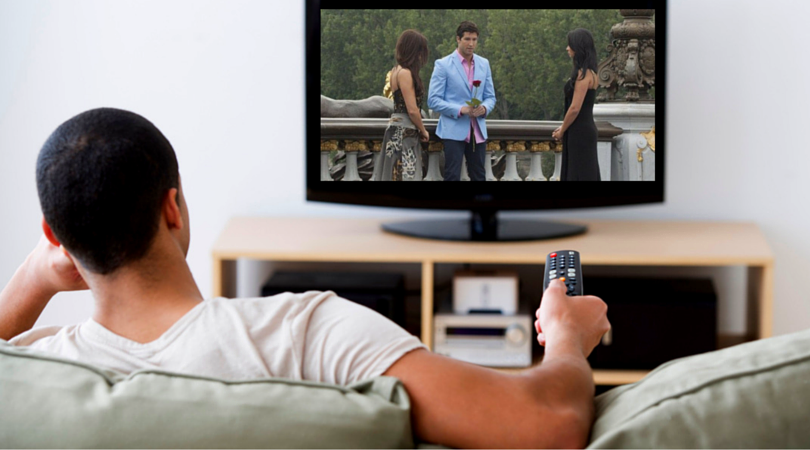
For over a decade, the battle for the television’s home screen has been fiercely fought. Platforms vied for dominance through sprawling menus, autoplaying trailers, and labyrinthine recommendation rows. Yet, by 2026, the most revolutionary user experience is defined not by what is on the screen, but by the absence of the screen itself—or rather, the absence of the interface as we know it. The winning paradigm is no longer about better navigation, but about eliminating navigation altogether. Welcome to the era of Zero-Click TV, powered by TVFlux’s Passive Ambient Interface. This is not television you watch; it is television that watches over you, seamlessly integrating into the rhythm of your life.
The Philosophy: From Demand to Ambient Intelligence
Zero-Click TV is the culmination of a shift from on-demand to in-context. Where traditional services ask, “What do you want to watch?” and AI curation asks, “What should you watch now?”, the passive interface asks a more profound question: “What should the environment feel like?” It treats the television not as a destination for content, but as a dynamic architectural element—a digital window, an art piece, a mood-setting canvas, or an information radiator that operates on the periphery of attention until needed.
TVFlux’s Ambient Interface achieves this through a layered system of perception and prediction:
- Spatial & Behavioral Sensing: Using a privacy-first, on-device sensor suite (a simple wide-angle camera and microphone array in the TVFlux Stream Box), the system builds a real-time model of the room. It doesn’t identify individuals; it classifies activity states:
Room_Empty,Focused_Viewing,Social_Gathering,Cooking,Work_from_Home,Relaxation,Morning_Routine. It does this by analyzing anonymized motion patterns, soundscape classifications (laughter, clinking plates, keyboard taps), and ambient light levels. - Biometric Weather Mapping: With opt-in wearable integration, the system can layer in a user’s physiological “weather.” An elevated stress level might nudge the ambient output toward a more serene palette, even if the activity state is
Work_from_Home. - Temporal & Data Context: The system cross-references the spatial model with time of day, calendar data (e.g., “Dinner with Alex” at 7 PM), and real-world triggers like local weather (a gray, rainy afternoon) or a major breaking news alert.
The Experience: A Day Without a Remote
Let’s walk through a day in a home equipped with TVFlux Ambient:
- 7:30 AM – Morning Resonance: You walk into the kitchen. The display, in
Morning_Routinemode, is already showing a TVFlux Canvas. It’s a live, real-time visualization of your day: a gentle, abstract flow of colors representing your calendar blocks, a minimalist feed of overnight headlines relevant to your interests, and a live view from a sunny beach in a location you’ve tagged as “aspirational.” No buttons, no logos. Just information as atmosphere. - 3:00 PM – Focused Workflow: You’re working at your desk in the living room. The system is in
Work_from_Homemode. The display shifts to a Deep Focus Flux: a slow, generative Lo-Fi animation synced to a curated, lyric-less ambient music live stream from a Berlin electronic label. It’s designed to promote concentration, its colors shifting subtly every 25 minutes to align with natural attention cycles. - 6:30 PM – Social Ambiance: Friends arrive. The system detects multiple voices and celebratory tones, triggering
Social_Gatheringmode. TVFlux now becomes a social catalyst. It launches Conversation Flux: a dynamic, ever-changing collage of breathtaking global live feeds—a sunset over Patagonia, penguins in an aquarium, a silent view of Tokyo’s Shibuya Crossing. It’s mesmerizing but wordless, designed to be glanced at, not watched, fostering conversation rather than competing with it. - 10:00 PM – Unwind & Disengage: As the evening winds down, the system senses slower movement and lower volume. It initiates the Wind-Down Sequence. The display slowly dims, transitioning to a single, static live shot of a starry night sky from an observatory in Chile, with a barely visible, slow-moving star trail overlay. At 11 PM, when the room is empty, it fades to black. You have not touched a remote all day.
Active-to-Passive Handoff: The True Genius
The brilliance of the system lies in its fluid handoff between passive and active viewing. When a specific, intentional viewing desire arises, the interface responds intuitively:
- You say, “That mountain stream looks beautiful.” The system understands the contextual cue, gently expands the stream to full screen, and adds a subtle information overlay: “Live from Banff National Park.”
- A major news event breaks. The Ambient Interface doesn’t scream for attention. It subtly pulses the edges of the display in a neutral tone and adds a small, elegant ticker along the bottom. A glance tells you the severity. A voice command (“Tell me more”) or a look held toward the sensor for three seconds seamlessly transitions the entire display into an active TVFlux Context Stream for the event.
The Strategic Imperative for TVFlux
For TVFlux, the Passive Ambient Interface is not a feature; it is a core strategic evolution.
- Ultimate Lock-In: When TV becomes an intelligent, ambient layer of the home—like heating or lighting—switching providers becomes unthinkable. It’s not changing an app; it’s changing your environment’s personality.
- New Value Proposition: It allows TVFlux to charge a premium not for more content, but for ambient intelligence and wellbeing. Subscriptions are framed as access to a serene, context-aware living space.
- The Data Frontier (Respectfully): The insights gathered from ambient sensing—understanding the rhythms of domestic life—are incredibly valuable for product design and even urban planning, all while maintaining strict, anonymized data protocols.
- Hardware Integration: This vision necessitates TVFlux moving deeper into hardware, offering certified Stream Boxes and smart display partnerships where the sensor suite and processing are built-in with privacy as a foundational hardware principle.
Conclusion: The Invisible Revolution
By 2026, the pinnacle of luxury in media is not exclusivity, but effortlessness. The Passive Ambient Interface represents the final step in television’s journey from a piece of furniture we gathered around, to a programmable device we fought with, to an intelligent environment that understands and adapts to us. TVFlux Ambient does not compete for your attention; it respectfully manages it. It transforms the largest screen in your home from a demand machine into a harmonious element of your daily flow. The future of the home screen is no screen at all—just the right experience, already there, waiting for you to notice. Or not. That is the quiet power of Zero-Click TV.