
Cognitive Viewing Systems: How Predictive Screens Are Learning to Think Ahead
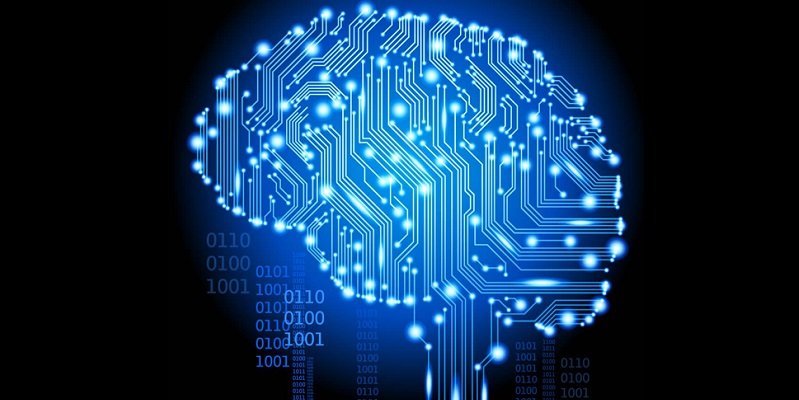
Introduction: From Reactive Screens to Predictive Intelligence
For decades, digital screens have behaved like obedient machines. They waited for input, followed instructions, and delivered results only after users made explicit choices. Even with personalisation algorithms and recommendation engines, most viewing environments remained reactive rather than proactive. Users still had to browse, search, and scroll before anything meaningful appeared.
In 2026, that paradigm is collapsing.
A new generation of digital viewing platforms is emerging — systems that no longer wait for commands but predict needs before users express them. These platforms do not simply react to clicks; they learn patterns, detect context, anticipate emotional states, and prepare experiences in advance. Instead of responding to behaviour, they forecast intention.
This evolution marks the rise of cognitive viewing systems — intelligent screen environments capable of interpreting behaviour, context, emotion, and situational goals to shape what appears on screen, when it appears, and how it is presented. These systems operate less like software and more like cognitive partners, quietly assisting decision-making and reducing mental effort.
This article explores how predictive intelligence is transforming digital viewing experiences, the technologies behind this shift, the design philosophies shaping next-generation interfaces, and the implications for homes, education, workplaces, healthcare, and public environments. It also examines the ethical challenges and psychological foundations of predictive screens, offering insight into how future viewing environments will feel less like tools and more like thinking environments.
1. What Are Cognitive Viewing Systems?
Cognitive viewing systems are intelligent digital platforms that go beyond personalisation by anticipating user needs before interaction occurs. Unlike traditional systems that respond to commands or surface content after user input, cognitive systems prepare interfaces proactively based on contextual inference and behavioural forecasting.
Rather than waiting for a user to search for something, a cognitive system predicts what the user is likely to want next — and positions it immediately. It reshapes layouts dynamically, adjusts information density, alters visual tone, and preloads relevant content in advance of explicit demand.
These systems rely on four foundational capabilities:
- Context inference — understanding environmental, temporal, and situational factors
- Behavioural prediction — forecasting user actions based on historical patterns
- Intent modelling — estimating goals and motivations rather than surface behaviour
- Adaptive interface orchestration — reshaping layouts, flows, and experiences dynamically
In practice, this means screens that behave like attentive assistants rather than passive displays. They adapt continuously, invisibly optimising experience flow while preserving user autonomy.
Cognitive viewing systems mark a shift from interaction-based design to anticipation-based design — a profound transformation in how humans relate to digital environments.
2. Why Prediction Matters More Than Personalisation
Personalisation has dominated digital design discourse for years. Platforms customise content feeds, adjust recommendations, and tailor layouts based on user preferences. However, personalisation alone does not eliminate friction. Users still navigate menus, search libraries, filter options, and make choices — even when content is relevant.
Prediction goes further.
Predictive systems attempt to eliminate the need for decisions altogether by preparing the right experience at the right time, in the right format, and at the right cognitive moment. Instead of asking, “What does the user like?” predictive systems ask, “What does the user need right now — and what will they need next?”
This distinction matters because:
- Humans experience decision fatigue when presented with too many options
- Attention is limited and fragile
- Cognitive load reduces engagement and satisfaction
- Emotional states influence content preferences more than long-term interests
- Context changes rapidly and unpredictably
Predictive systems reduce friction by narrowing the field of choices to those most relevant in the moment — sometimes presenting only one optimal option rather than many. This does not restrict freedom but enhances efficiency and comfort.
Where personalisation optimises relevance, prediction optimises timing — and timing often matters more than preference.
3. The Core Technologies Behind Predictive Screens
Cognitive viewing systems depend on a convergence of advanced technologies that operate continuously and invisibly in the background.
3.1 Behavioural Forecasting Models
Traditional analytics systems track what users do. Predictive systems model what users are likely to do next.
Behavioural forecasting models analyse:
- Time-of-day activity patterns
- Content engagement sequences
- Navigation habits
- Session duration fluctuations
- Device switching behaviour
- Response latency trends
These signals allow platforms to estimate future actions with high probability — enabling screens to preload content, prepare layouts, and reshape interface structures before the user initiates interaction.
This pre-emptive preparation reduces latency, search effort, and cognitive friction.
3.2 Intent Inference Engines
Beyond behaviour, predictive systems attempt to infer intent — the underlying goal behind an action. For example:
- Scrolling through multiple short clips may signal boredom rather than content preference
- Replaying instructional segments may signal confusion rather than interest
- Skipping recommendations quickly may signal decision fatigue rather than dissatisfaction
Intent inference engines analyse behaviour patterns alongside contextual cues to estimate motivations, goals, emotional states, and situational constraints.
This allows systems to respond intelligently — offering guidance when users are lost, stimulation when users are bored, simplicity when users are overwhelmed, and depth when users are focused.
3.3 Contextual Signal Fusion
Predictive screens integrate multiple contextual data streams:
- Temporal context (time of day, day of week)
- Spatial context (location, room type)
- Environmental context (lighting, noise, motion)
- Social context (alone, group, workplace)
- Device context (screen size, input modality)
By fusing these signals, systems build probabilistic models of user state — enabling real-time adaptation without explicit instruction.
Contextual fusion transforms screens from static surfaces into situationally aware environments.
3.4 Real-Time Adaptive Rendering
To support continuous prediction-driven adaptation, interfaces must re-render dynamically without perceptible disruption. Real-time adaptive rendering engines modify:
- Layout structures
- Content density
- Typography scale
- Colour schemes
- Motion behaviour
- Interaction complexity
These changes occur seamlessly — often invisibly — allowing interfaces to evolve naturally alongside user state.
3.5 Edge Intelligence and Local Processing
Predictive systems increasingly rely on on-device processing rather than cloud-only computation. Edge intelligence enables:
- Lower latency responses
- Offline continuity
- Enhanced privacy
- Reduced network dependency
- Real-time adaptation
Local processing ensures predictive systems remain responsive even in bandwidth-constrained environments such as classrooms, healthcare facilities, transport hubs, and rural regions.
4. From Interfaces to Anticipation Engines
Traditional interface design centres on control surfaces — buttons, menus, navigation bars, and hierarchies. The user’s job is to operate the system correctly.
Predictive systems invert this model.
Instead of presenting controls, screens present outcomes. Instead of waiting for commands, systems offer solutions. Instead of asking users to choose, interfaces narrow possibilities intelligently.
This transformation turns screens into anticipation engines — systems that continuously estimate what users will need next and arrange experiences accordingly.
4.1 The Decline of Navigation
As predictive accuracy improves, explicit navigation becomes less necessary. Menus fade into the background. Search bars become secondary. The interface increasingly consists of surfaced content rather than navigational scaffolding.
Users move through experiences without consciously navigating them.
4.2 The Rise of Outcome-Oriented Design
Predictive interfaces focus on delivering outcomes rather than options. For example:
- Instead of listing hundreds of videos, the system surfaces one optimal experience
- Instead of presenting a dashboard of tools, it launches the next relevant task
- Instead of offering content categories, it provides immediate context-appropriate content
This outcome-oriented design reduces friction and accelerates engagement.
4.3 Interaction as Confirmation, Not Initiation
In predictive systems, user input increasingly serves as confirmation rather than initiation. Users confirm or adjust what the system prepares, rather than building experiences from scratch.
This dynamic mirrors human collaboration — where one partner anticipates needs and the other validates or refines suggestions.
5. Predictive Viewing in Home Environments
Homes represent the most mature environment for predictive screens, where personal context, routine patterns, and emotional rhythms are rich and predictable.
5.1 Morning Anticipation Systems
In the morning, predictive screens prepare dashboards before users engage. These dashboards may include:
- Weather summaries
- Schedule highlights
- Short educational or informational content
- Traffic updates
- Wellness prompts
Rather than waiting for interaction, the screen surfaces what users are most likely to need within seconds of activation.
5.2 Evening Relaxation Orchestration
In the evening, predictive systems shift tone. Visual intensity softens. Content becomes lighter. Cognitive load decreases. Interfaces simplify.
If the system detects fatigue, stress, or disengagement, it surfaces calming content, shorter formats, or mood-supportive visuals — often without explicit input.
5.3 Family and Group Prediction
In shared environments, predictive systems model group dynamics rather than individual preferences. Screens detect multiple users, infer age groups, identify social contexts, and prepare experiences suitable for collective consumption.
This reduces negotiation friction and improves shared viewing satisfaction.
6. Predictive Screens in Education
In educational environments, predictive intelligence enables proactive support rather than reactive remediation.
6.1 Anticipatory Learning Pathways
Predictive learning platforms analyse:
- Performance trends
- Error patterns
- Engagement signals
- Attention fluctuations
- Task completion speed
Using these signals, systems anticipate learning challenges before students encounter them — surfacing remedial explanations, visual aids, or alternative learning modes proactively.
This prevents confusion before it arises, rather than correcting it after failure.
6.2 Dynamic Difficulty Adjustment
Predictive systems continuously recalibrate content difficulty based on real-time learner response. When mastery is detected, complexity increases. When struggle is detected, scaffolding appears.
Learning environments become self-regulating rather than static.
6.3 Emotional Prediction and Support
By analysing interaction rhythms and behavioural signals, predictive systems detect disengagement, frustration, or fatigue — and intervene with encouragement, breaks, motivational prompts, or alternative presentation formats.
This supports emotional wellbeing alongside academic performance.
7. Predictive Viewing in Corporate Environments
In workplaces, predictive screens become productivity accelerators rather than passive dashboards.
7.1 Task Anticipation Engines
Work platforms analyse workflow patterns to anticipate next tasks — surfacing relevant documents, tools, and communication channels before employees request them.
For example:
- After a meeting ends, action-item dashboards appear automatically
- When deadlines approach, priority views surface
- During creative work, ideation tools replace analytics dashboards
This eliminates tool-switching friction and cognitive overhead.
7.2 Predictive Meeting Interfaces
Meeting rooms equipped with predictive screens automatically:
- Identify participants
- Load agendas
- Surface relevant documents
- Activate collaboration tools
- Prepare transcription and summarisation layers
Meetings begin instantly and flow smoothly — without manual setup.
7.3 Knowledge Discovery Acceleration
Predictive knowledge systems analyse problem-solving behaviour to anticipate information needs — surfacing relevant documentation, expertise networks, and historical cases proactively.
This reduces search time and improves decision velocity.
8. Predictive Screens in Healthcare and Wellness
In healthcare environments, predictive viewing systems become cognitive safety nets.
8.1 Patient Monitoring Interfaces
Predictive displays analyse biometric signals, behavioural data, and medical history to anticipate risk states — surfacing alerts before deterioration occurs.
This enables earlier intervention and improved patient outcomes.
8.2 Clinical Workflow Optimisation
Screens anticipate clinician needs — preparing patient summaries, test results, and treatment protocols automatically before consultations begin.
This reduces cognitive load and error risk.
8.3 Mental Health Support Environments
Predictive wellness platforms detect emotional distress patterns and surface calming interventions, mindfulness prompts, or supportive content proactively — helping users regulate emotional states.
9. Predictive Systems in Public Spaces
Public environments benefit significantly from anticipation-based interfaces.
9.1 Transport Infrastructure
Predictive transit screens anticipate crowd flows, delays, and routing needs — surfacing navigation guidance before congestion forms.
Rather than broadcasting static schedules, screens deliver context-sensitive, forward-looking guidance.
9.2 Retail Environments
Predictive retail displays analyse shopper behaviour to anticipate product interest, timing needs, and purchase intent — surfacing relevant information dynamically.
This improves conversion while reducing cognitive overload.
9.3 Civic Infrastructure
In smart cities, predictive screens anticipate public information needs — surfacing alerts, services, and guidance proactively during emergencies, events, or peak periods.
10. The Psychology of Prediction-Based Interfaces
Predictive screens succeed when aligned with human cognitive processes.
10.1 Decision Fatigue Reduction
Humans experience cognitive depletion when forced to make repeated decisions. Predictive interfaces reduce decision load by narrowing choices and preparing optimal outcomes.
This improves satisfaction, reduces abandonment, and increases sustained engagement.
10.2 Anticipatory Pleasure
Neuroscience research shows that anticipation itself generates pleasure. When systems predict user needs accurately, users experience delight — reinforcing trust and emotional attachment.
10.3 Flow State Enablement
Predictive environments remove friction between intention and outcome, enabling flow states — periods of deep immersion, focus, and productivity.
Screens disappear into experience.
11. Trust, Transparency, and Predictive Ethics
Prediction introduces ethical complexity.
11.1 The Risk of Overreach
Predictive systems risk making users feel controlled rather than assisted. If systems anticipate incorrectly or too aggressively, trust erodes.
Designers must balance helpfulness with humility — allowing users to override, adjust, and correct predictions easily.
11.2 Explainable Prediction
Users must understand why systems suggest or surface certain content. Transparent explanation builds trust and mitigates manipulation concerns.
11.3 Consent-Based Forecasting
Predictive systems must operate within explicit consent frameworks — particularly when emotional, behavioural, or contextual signals are involved.
11.4 Avoiding Behavioural Narrowing
Prediction risks reinforcing habits and reducing exploration. Ethical systems incorporate diversity injection mechanisms — deliberately surfacing novel or unexpected options periodically.
12. Predictive Interfaces vs Reactive Interfaces
| Dimension | Reactive Interfaces | Predictive Interfaces |
|---|---|---|
| Interaction Model | User initiates | System anticipates |
| Content Delivery | After request | Before request |
| Navigation | Manual | Minimal |
| Personalisation | Behaviour-based | Intent-based |
| Emotional Awareness | None | Contextual |
| Cognitive Load | High | Low |
| Engagement Flow | Fragmented | Continuous |
Predictive systems represent the next major interface paradigm shift.
13. Designing Predictive Viewing Systems
Designing anticipation-driven environments requires new principles.
13.1 Anticipation Without Assumption
Systems should estimate needs probabilistically, not assertively. Predictions must feel like helpful suggestions — not imposed decisions.
13.2 Soft Suggestions, Not Hard Defaults
Predictive interfaces should surface recommendations while preserving user agency. Override controls must remain visible and accessible.
13.3 Minimal Disruption
Predictions should unfold seamlessly — without sudden layout changes or jarring transitions. Calmness is critical.
13.4 Confidence Gradation
Systems should display confidence visually — strong predictions appear prominently, weaker predictions appear subtly.
14. The Future of Predictive Viewing Systems
Over the next decade, predictive screens will evolve across several dimensions.
14.1 Emotional Forecasting
Systems will increasingly anticipate emotional states — preparing content environments optimised for upcoming mood shifts rather than current moods.
14.2 Multi-Agent Cognitive Orchestration
Screens will coordinate multiple predictive agents — attention agents, emotion agents, task agents — working together to shape experience holistically.
14.3 Predictive Narratives
Storytelling environments will adapt plot pacing, tone, and content based on predictive engagement models — creating personalised narrative flows.
14.4 Cognitive Health Systems
Predictive platforms will optimise mental wellbeing — managing stimulation, attention, stress, and recovery cycles intelligently.
15. Industry Implications
15.1 Business Models Shift Toward Experience Quality
Instead of monetising attention volume, platforms will monetise satisfaction, retention, emotional resonance, and productivity outcomes.
15.2 New Professional Roles
Emerging roles include:
- Predictive experience architects
- Cognitive interface engineers
- Behavioural forecasting specialists
- Ethical AI governance designers
- Emotional UX researchers
15.3 Platform Differentiation Through Anticipation Accuracy
Competitive advantage will shift toward systems that predict most accurately — not those with the largest content libraries.
16. Predictive Viewing Case Scenarios
16.1 A Predictive Morning Routine
The screen activates before the user interacts, displaying a personalised morning dashboard — weather, commute time, key meetings, wellness prompts — and suggests a short educational video relevant to upcoming tasks.
No commands. No search. Just readiness.
16.2 A Predictive Classroom
As students begin struggling with a concept, the system surfaces visual explanations automatically. When engagement drops, interactive activities appear. When mastery emerges, advanced content loads.
Learning unfolds without interruption.
16.3 A Predictive Workplace
Before meetings, screens load agendas, documents, and collaboration tools. After meetings, summaries and task dashboards appear. During focused work, distractions fade automatically.
Work flows naturally.
17. Predictive Systems and Human Agency
Predictive systems must enhance — not replace — human agency.
Users must:
- Retain final decision authority
- Understand system behaviour
- Control personalisation levels
- Adjust or disable prediction layers
- Explore beyond recommendations
The goal is partnership — not automation dominance.
18. Comparing Predictive Systems to Traditional Recommendation Engines
Recommendation engines suggest options. Predictive systems orchestrate experiences.
| Feature | Recommendation Engines | Predictive Viewing Systems |
|---|---|---|
| Focus | Content relevance | Experience orchestration |
| Input | Past behaviour | Context + behaviour + intent |
| Output | Lists of options | Pre-configured experiences |
| Timing | After request | Before request |
| Interface | Static | Dynamic |
| Emotional awareness | None | Integrated |
This shift redefines how screens serve humans.
19. Preparing Organisations for Predictive Viewing
To prepare for predictive systems, organisations must:
- Invest in behavioural modelling infrastructure
- Develop intent inference frameworks
- Adopt adaptive interface architectures
- Implement privacy-first design principles
- Build ethical governance structures
- Train multidisciplinary teams
Predictive intelligence rewards design excellence — not feature accumulation.
20. Conclusion: When Screens Learn to Think Ahead
Predictive viewing systems represent the next evolutionary step in human-computer interaction. Screens no longer wait. They anticipate. They prepare. They adapt.
This shift transforms screens from tools into cognitive partners — systems that reduce mental effort, enhance wellbeing, accelerate productivity, and support emotional resonance.
As predictive accuracy improves, screens fade into the background of experience. Interaction becomes effortless. Discovery becomes intuitive. Friction dissolves.
The future of digital viewing is not faster menus or sharper displays — it is thinking environments that meet human needs before humans articulate them.